Skip to Content

United for Health. Empowered for Life.

We empower communities through HIV awareness, prevention, support, and education. Kivuce Foundation works to reduce stigma and help individuals and families live healthy, dignified lives.

PROGRAM ACTIVITIES

1. Health Education

The programme raises awareness through HIV and AIDS education sessions in the community through outreach events like drama, songs and video shows.Health education is provided by trained peer educators, programme coordinators, counselors and HBC volunteers. The main themes are HIV and AIDS basic facts, nutrition, nursing care, Sexually Transmitted Infections and community involvement.

Peer educators conducting Health education session in the Community through drama.

2. Voluntary Counseling and       Testing:

The programme raises awareness through HIV and AIDS education sessions in the community through outreach events like drama, songs and video shows.Health education is provided by trained peer educators, programme coordinators, counselors and HBC volunteers. The main themes are HIV and AIDS basic facts, nutrition, nursing care, Sexually Transmitted Infections and community involvement.

Group counselling

3. Home Based Care Services:

Rainbow Centre provides home based care services to AIDS patients, chronically ill patients, orphans and vulnerable children. This service is provided by HBC coordinators and volunteers, who visit bedridden patients at home twice a week. They encourage families and the community to take the responsibility of caring for the patients as well as the OVCs. They provide health education, counseling, spiritual care, Material support i.e drugs, food, soap, clothes, and referrals for the complicated cases to hospitals and health units.

Home based care service

4. Orphans and Vulnerable Children Support:

The program supports orphans and vulnerable children by providing them with educational materials, food in schools and for a few at their homes, medical care, spiritual and psychosocial support.

The OVCs supported by the programme are the most destitute in the catchment’s areas. The program me gives priority to OVCs who have lost parents, are lacking adult care (child headed families) and those living with elderly care takers with very low incomes.

OVCs with new uniforms, school bags and stationery supported by Rainbow Centre.

5. PLHIV Support Groups:

The people living with HIV and AIDS are encouraged and directed to form support groups through which they can collectively be supported in different ways like medical care, nutrition education, entrepreneurs and many other positive living modalities.

In the catchment areas of Rainbow Centre 11 groups have been formed and

SN

Group Name

Place

Activity

1

Jipemoyo women’s group

Majengo

Pig-keeping, Poultry and Pet business Project

2

Matumaini

Kilema

Piggery and Goat keeping project

3

Huruma Club

Hai

Pet business

4

Matumaini

Hai

Pet business and poultry project

5

Amani

Himo

Pet business

6

Faraja

Mbokomu

Poultry and Pet business

7

Upendo

Soweto


Gardening.

8

Jipemoyo

Sambarai

Gardening and Pet business

9

Farijianeni

Kibosho

Poultry and pet business

10

Sayuni

Kibosho

Poultry and Pet business

11

Jasiri

Kibosho

Poultry and Pet business

One of PLHIV Support groups – Jipemoyo group Majengo Moshi.

These groups meet regularly with HBC Coordinators for the following purposes:

-         Education on HIV/AIDS/STI and behavior change.

-         Importance of CTC and CD4 monitoring.

-         ARV adherence.

-         Education on nutrition.

-         Engagement in entrepreneurial activities at different levels.

These groups have constitutions. 

Coming together in groups, PLHIV have an opportunity to share their views and so put their joined efforts towards positive living and against stigma and discrimination.

During their sessions they build up courage to be honest and open to the community. Some of them help in the community   on promoting behavior change as well as provision of health education to the public. 

6. Income Generating Activities:

The programme sensitizes PLHIV, Women’s groups and foster parents to initiate income generating activities (IGA) to make them less dependent. A variety of small scale projects have been initiated, these includes livestock keeping, poultry keeping, small scale farming, gardening and small businesses. So far Rainbow Centre has supported more than 76 income generating activities initiated by beneficiaries. 

ACHIEVEMENTS

1.     Provision of support to Orphans and Vulnerable Children in 5 Zones to include:

 a.  The provision of Education Support to 4402 OVC (3390 with Primary Education; 889 with Secondary school support, 108 through Vocational Training and 15 with Higher Education).

b.     The provision of Food Support to 10,357 OVC.

2.     Provision of Support to People Living with HIV (PLWHIV)

a.        Support for Anti-Retroviral Therapy – 817 persons

b.        Provision of nutritional support to 1332 persons.

3.     Provision of psychosocial support and counseling to 590 persons

4.     Support for knowledge and skills building through various trainings for 65,326 persons

5.     Provision of access to Voluntary Counseling and Testing (VCT) Services for 34,037 persons.

6.     Provision of Prevention of Mother to Child Transmission (PMTCT) intervention to 8736 mothers

Through these activities, Rainbow Centre has realized the following changes in the community it serves:

  1. Increased HIV and AIDS awareness and knowledge in the community
  •  Through 76 Competent volunteers who are an HIV and AIDS resource in their communities.
  •   18 peer educators on home based care

b. Reduced stigma

  •  Social acceptance of PLHIV
  • PLHIV family acceptance and support
  •  PLHIV openly declaring status and becoming involved in awareness interventions

c. Improved quality of life for people infected by HIV and AIDS

  • Productive life
  • Self confidence and hope
  • Prolonged life

d. Improved health of PLHIV as a result of services provided

  •  Treated for opportunistic infections
  • Improved drug adherence
  • Reduced number of bed ridden cases due to ART and HBC

e. Economically empowered PLHIV

  • Access to loans from Village Community Banking
  • Entrepreneurial skills
  • Increased income from small businesses
  • New and expanded businesses

f. Self reliant OVC

  •  Gainfully employed eg. Tailoring business
  • Responsible youth and young adults

g. Community behavior change

  • VCT seeking behavior has improved
  • Community members in the project area are now accessing VCT services easily
  • Reduced stigma
  • Contributed to reduced infection rate

h. Community structures in place such as community groups responsible and responding to HIV and AIDS effects

i. Enhanced organizational and technical capacities of partners

  • Strengthened financial management, accountability and resource mobilization capabilities
  • Improved programme focus and clarity of vision (strategic plan)
  • Staff more informed and have updated information on HIV and AIDS issues
  • Improved knowledge, access to information has enabled partners to design and deliver more appropriate programmes and services.
  • These capacities have translated into improved delivery of quality HIV and AIDS and livelihood services to beneficiaries.

successful stories/ testimonies

1. CLAUDIA MVUNGI (Orphan)

Dear sponsors, sisters, fathers, and all colleagues who dared to help me to reach where I am today, I salute you all.

"

I write this special paper to you to thank you for your assistance which you had been providing to me in order to enlightened my life as you lifted me from zero to hero. Your sponsorship through Rainbow Centre has been very crucial and helpful towards my needs and because this may Almighty God bless you.

You may ask who is writing this piece, but don’t be surprised, it is me, Claudia Vendeline Mvungi, the current 3rd year student of Bachelor of Art in Mass communication at St Augustine University of Tanzania due to effort and assistance of sponsorship through Rainbow Centre since 2004 to date.

LIFE EXPERIENCE

Since I was born I was not able to see my father as he passed away and thus remained a single parent child. This made my mother struggle for her family as she was helpless in order to acquire basic needs.  Luckily enough in 2001 she was able to build her own house at their home place whereby 2002 we were able to stay there.

Soon after we moved to our new house my mother passed away and for this we turned orphans. Life in turn became sour as we had no assistance from our relatives but disappointments. This situation made one of my sisters to get married to get away from our relatives.
A few months after the burial ceremony, our relatives agreed to push us away from the house which was left by our mother. This situation was very challenging and led us to rent a house even without knowing where to get rent money. With such circumstances I had to quit school for sometimes in order to help my sister to sell goods at the market so that we could meet our basic needs and rent as well.
One year after, my sister was able to negotiate a piece of land to build a new house and then paying for sometimes. This made us struggle harder to get money for the land and start the building process. Keep in mind that I was in standard seven and my younger sister was in standard three.
After I had finish my standard seven studies I was able to pass the exams for secondary study and it was a challenge since we had no money for paying the school fees for me to continue with studies.
2004 was the remarkable year. Rainbow Centre was able to pay a visit at Makuyuni primary school in order to see the orphaned pupils and those who are in a high-risk environment with aim of providing assistance not only material but also ideas so that  they may not feel isolated and encourage them toward life.
Through such visit of Rainbow Centre under Sr Udalda Kessy and Sr Balbina they were able to visit our house to see our living condition which was actually very bad. We had to work on people’s farms and making sisal ropes to acquire basic needs.
I am thanking Rainbow Centre for seeing how life was miserable for us and thus provided us with assistance in terms of education and basic needs. I was then able to join secondary school where I was selected to go by the government.
Through all the time our relatives harassed us as where do we get money to buy a piece of land as well as to build a house. This made us unhappy. As Rainbow Centre kept on providing us with assistance, my second sister got married to get away from our relatives. At this time I had to remain with my young sister at home.
Surely this was the moment life became more miserable because we might be raped, kidnapped or any bad thing might happen to us. Only the hand of God was upon us.
In 2005, Sr. Ubalda was able to take us to her relatives at Sanyajuu where we had the comfort of father and mother figures and were able to study without any problem and enjoy life as others. I was able to start form one again and be able to pass  form four to form five, and form six to University, where I am today.
But all this is not because I was a genius. NO! It’s because God has something for me. Through Rainbow centre I thank all of you for providing assistance towards my life, may God bless you.

My Ambition

Once I’ve finished my studies and get employed my aim is to help those in need as I was. I believe that there are many people who are facing hard times even more than I had to pass through and thus they need help and to be encouraged as I was. Through this, I will do my best to keep on build the city of God. Finally I thank all of you and hope that you will keep on being kind to those in need, not only here in Tanzania but throughout the world.

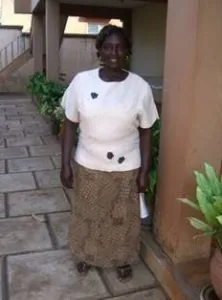
2. SIA PETER MOSHA (PLHIV)

Testimony as narrated by one of our beneficiaries named Sia Peter Mosha who is in the pecture below;

"


I am a woman living with HIV. I was married with two children. My husband died in 2003 of AIDS. After the death of my husband I became ill and had no income to meet our basic needs. My condition was very poor and no one to support me due to stigma and discrimination. In the year 2004, one woman came and told me about Rainbow Centre services and advised me to visit the centre. I agreed with her and went there, where I was counseled and tested for HIV; unfortunately I was found to be HIV positive. I was very disappointed with the results but through supportive counseling and education provided by Rainbow Counselors I became happy and start living with hope.
As my condition was not good, Rainbow Centre provided me with medication for treatment of opportunistic infections and food and school support for my two children. Later, they referred me for CD4 check up and I started ART.
From then my health improved and was able to participate in economic activities. I joined a PLHIV Support group known as Jipemoyo at Majengo. In this group I got an opportunity to share views and experiences with my colleagues and also became involved in the income generating activities of the group. Through the group and support from Rainbow Centre I have been able to initiate my own income generating activities. Currently, I have a poultry project. Income from this project helps me to meet the basic needs of my family.
Now my children are in secondary school in Arusha region and they are doing well academically.
I can honestly tell you that Rainbow Centre has changed my life, from sadness to happiness and from sickness to healthiness. 
I take this opportunity to thank Rainbow Centre together with their donors for the support given to us and to other people in need.


Lessons learned:
  1. Income generating activities reduce dependence among beneficiaries.
  2. Involvement of small Christian Communities has created a big impact in upporting PLHAs and OVCs.
  3. Empowered women’s groups are in a better position to support and sustain PLHAs.
  4. Involvement of PLHAs in awareness campaigns and income generating activities reduces stigma.
  5. Community responses to VCT services are higher when services are closer to them.


collaborations

Rainbow Centre collaborates with other active organizations in the region. These organizations are: KIWAKKUKI (The Kilimanjaro Women Group Against AIDS), Tumaini Centre, SAKUVI (Saidia Kupambana na UKIMWI Vijijini) and the Moshi Municipal council. The Government National AIDS Control Programme had the major role of coordinating the private organizations and also provided technical support in all prevention, care and support activities.

CHALLENGES AND WAY FORWARD

Challenges:
  • The Rainbow Centre programme has also encountered some Challenges and difficult issues. These include:
  • Inadequate funds to cover all the programme activities
  • Inadequate transport for volunteers to reach distant places
  • OVC not being in the programme feel isolated
  • Low prospects of continued volunteer motivation without regular follow-up and transport allowance
  • Declining profits from farming businesses due to the increased cost of inputs
  • Continued OVC schooling needs beyond the period of exit
  • Need for additional capital for VICOBAs and training on VICOBAs.
  • Future of Rainbow Centre after withdrawal of CAFOD’s support.
Way forward:
  • Continue with resource mobilization activities.
  • Initiate income generating projects for the organization.
  • Networking with other organizations in the region.
  • Sensitize community on project ownership and sustainability.
MONITORING AND EVALUATION
Rainbow Centre’s management team was responsible for the continuous monitoring of programme activities to ensure consistency and focused implementation of planned work. Monthly meetings were conducted at each zone by zonal coordinators and community volunteers and centrally by zonal coordinators and RC project team to share experiences and reports. Periodic supervision visits were also conducted to track and document project progress and challenges.   During supervision visits IGA beneficiaries were visited and advised on good practices to encourage improvement and promote resilience among beneficiaries and reduce donor dependency. Semiannual and annual reports were written and shared with key project stakeholders.
CAFOD’s HIV & AIDS Programme Officer monitored the project regularly and spent time strengthening staff capacity and sharing best practices from other CAFOD projects.  The support largely included: listening to beneficiaries’ success stories and offering advice to the partner on areas where a beneficiary needed comprehensive services, the importance of partnering with other agencies to realize comprehensive care and documenting success stories to strengthen learning both at RC level and within East Africa with other CAFOD partners.  Other areas of staff capacity building that were strengthened as a result of monitoring included: Project start up training, general implementation and monitoring advice, induction on beneficiary monitoring tools, conducting annual organizational assessments on services they provide to the community and measuring their comprehensiveness, and mentorship by a peer organization. 
CAFOD EXIT FROM SUPPORTING RAINBOW CENTRE
CAFOD provided significant support to Rainbow Centre, under the Catholic Diocese of Moshi in the period of 2004 - 2014.

On behalf of the Rt. Rev. Isaac Amani, the Bishop of the Catholic Diocese of Moshi, Diocesan Board, the management team of Rainbow Centre, all the beneficiaries who received support and those who are still receiving support from CAFOD – England since the year 2004, our deepest gratitude is extended to CAFOD England and East Africa for the strong support to our programme.
The great support from CAFOD has brought changes to the quality of life to our beneficiaries through HIV and AIDS care, treatment, prevention and mitigation. Beneficiaries received health education, Medical and nutritional support to PLHIV and OVCs, School support to OVCs and entrepreneurship skills to both PLHIV and OVCs support groups for IGAs.
Home Based Care services provided to bedridden clients, of whom a significant number of them have improved and resumed their routine activities. 
Through health education and awareness rising in both primary and secondary beneficiaries, discussion about HIV and AIDS in the community without fear became easier and so reduced stigma and discrimination.
This lead to a positive impact on behavior change.

The great support to our orphans and patients brought new life to these groups. Some income generating activities supported by CAFDO have enabled our beneficiaries to carry their daily activities and live their lives without much stress and hence those expected to have died are now at work. With this fantastic work and great support from CAFOD, we would like to extend our sincere thanks to all CAFOD staff and members: may Almighty God reward and grant long life to all those who did what they could to support our people.

The decision reached by CAFOD of exiting from supporting Rainbow Centre and her beneficiaries becomes painful and deeply touching because most of our community felt-needs will remain without reliable support, a circustance which is very difficult for the Diocese’s mission.   
It is our great hope that CAFOD will continue with its support to people throughout the world in line with its Vision and Mission.

ACHIEVEMENTS

For the period of April 2004 – March 2014, through CAFOD support Rainbow Centre achieved the following:
  1. HIV and AIDS awareness
A total number of 5,981 youth (male 2574 and female 3407) and
43832 adults (male 18,539 and female 25,293) were reached with awareness rising, VCT services given to a total of 30688 clients (Me 12250 and Fe 18438).

2. PMTCT services

In collaboration with NACP and other stakeholders including CAFOD a total of 7525 pregnant mothers received PMTCT services as shown in the table below.
TESTED POSITIVE NEGATIVE REFERRALS
7,525 217 7,308 217

3. Care and support to OVC and PLHIV
Rainbow Centre through the CAFOD funds managed to support a total of 245 - 300 OVCs with school fees, scholastic materials, nutrition, and medication and psychosocial support annually. 
OVC who received support continued with their studies without interruptions.
A total number of 200 PLHIV were annually supported by the provision of nutrition, medical treatment and psychosocial counseling. The supported PLHIV adhered to their drugs regimes especially ART and their health improved, allowing them to continue with their daily activities.

4. PLHIV Support group
Rainbow Centre managed to sensitize PLHIV to initiate support groups. Eleven groups have been formed with a total of 590 members (122 male and 468 female). Our aim in forming these groups is to empower them with entrepreneurial skills and engage in IGAs to support themselves.
So far there are 2 successful IGA groups out of the 5 supported. The programme supported 5individual IGAs and all are progressing well.   

5. CHALLENGES
  • A reasonable number of OVC under CAFOD support will still be in school and VTCs after exit and some will continue till 2017.
  • Lack of sustainable source of funding for the programme 
  • Inadequate  knowledge on exit strategy
  • Some of the supported IGAs still need improvement

6. NEW FOCUS JUST BEFORE AND AFTER CAFOD EXIT
The programme is intending to revisit and embark on restructure the current planned activities in order to be in a position to accomplish the key areas of coverage eg OVC in school, IGAs for both the programme and beneficiaries, and the ongoing capacity building.